

Hey, i'm cilla.
Probably on the hunt for the best donut in town while listening to Noah Kahan and yapping about Taylor Swift.
1:1 body image coaching
join the lunchbox notes (my bi-weekly newsletter)
body image fanny pack
What Dora, Career Pivots, and Eating Disorder Recovery Have in Common
I’ve pivoted so many times my LinkedIn thinks I’m unstable. Turns out, it’s just self-trust in action.
The Art of Pivoting
- Pivot: the word that ruined furniture moving forever.
- Pivot: the central point everything turns around.
- Pivot: to completely change direction.
My definition? “I can’t fucking do this anymore—something’s gotta change.”
The First Time I Ignored My Gut
My first memory of making a “big” decision was during my kindergarten graduation rehearsal, when I had to declare what I wanted to be when I grew up.
The visceral panic I felt at five years old could honestly be studied.
Do I say something cool?
Do I copy my best friend?
Or do I actually tell the truth?
“Doctor,” I said.
How boring. And not even remotely true. (For the record, I wanted to be Dora. Which, honestly, checks out.)
That was the first time I chose fitting in over following my gut and the first of many pivots to come.
But that moment stuck with me, not because of the answer itself, but because it was probably one of the first times I remember choosing what made sense over what actually felt true.
At five, it looked harmless. Just a kid trying to fit in. But choosing what feels acceptable over what feels true? That’s a pattern a lot of us know intimately.
Eating Disorders Don’t Just Disrupt Food, They Disrupt Self-Trust
If you’ve ever struggled with an eating disorder, disordered eating, or body image stuff, you probably know that exact feeling.
- They teach you that your hunger is suspicious.
- That your cravings are morally questionable.
- That your body’s needs are inconvenient.
- That your instincts can’t be trusted.
When You Stop Trusting Yourself, It Spills Into Everything
And once your brain learns that pattern, it doesn’t stay neatly contained to food. It spills.
- Into relationships.
- Career decisions.
- How you dress.
- What you say.
- Whether you take up space.
- Whether you trust yourself enough to change your mind.
Because if you’ve spent years being taught that your body is lying to you… Why would you trust your gut anywhere else?
And wow, did I become excellent at outsourcing my decisions.
My Extremely Non-Linear Career Path (Or: A Masterclass in Pivoting)
I had no fucking clue what I was doing. And yet, every pivot taught me something.
- Nursing lasted approximately one week.
- Radiation therapy felt safer until I got waitlisted.
- Psychology happened because… I needed a Plan B.
- Then social work.
- Then therapy.
- Then specializing in eating disorders.
- Identity chaos™
- Then I saw a TikTok about Pinterest management, bought a questionable course, and accidentally started a business.
- Which somehow led to copywriting.
- Which somehow led here.
Every Pivot Was Actually Self-Trust Practice
Objectively? Chaos. Subjectively? Self-trust training.
Pivoting is my secret weapon. It’s iconic. Radical, even.
My whole damn personality.
Because every time I chose curiosity over approval, I got a little louder.
A little clearer.
A little more me.
And I think that’s why eating disorder recovery can feel so disorienting.
People think recovery is just learning how to eat fear foods or stop body checking or buy the jeans in the bigger size.
And sure—that’s part of it.
But underneath all of that, recovery is rebuilding your relationship with your own internal knowing.
It’s learning to ask: What do I actually want?
Not what diet culture wants.
Not what your anxiety wants.
Not what your mom, your ex, your wellness podcast, or that terrifyingly confident girl on TikTok wants.
You.
That’s why recovery can feel weirdly grief-y.
Because some people genuinely don’t know, and it’s not because they’re broken, it’s because they’ve spent years being disconnected from themselves.
Recovery Is Identity Work
- Recovery isn’t just body image work.
- It’s identity work.
- Self-trust work.
- Permission-to-be-a-human work.
And honestly… That five-year-old version of me who wanted to be Dora?
She wasn’t confused.
She was adventurous. Curious. Brave.
She knew exactly who she was.
The noise just got louder.
So maybe recovery isn’t about becoming someone new.
Maybe it’s about getting back to the version of you who knew.
The one before the rules.
- Before the shoulds.
- Before the body shame.
- Before someone convinced you your instincts were dangerous.
- Because every time you honor your hunger…
- Set a boundary…
- Wear the damn shorts…
- Try something scary…
- Change your mind…
You’re practicing self-trust.
That’s the real recovery work.
So no—Pivoting isn’t failure. It’s permission.
- Permission to evolve.
- Permission to disappoint people.
- Permission to not make linear sense.
- Permission to become more yourself.
And every pivot I’ve made has really just been one more way of saying what five-year-old me couldn’t:
“When I grow up, I want to be me.”
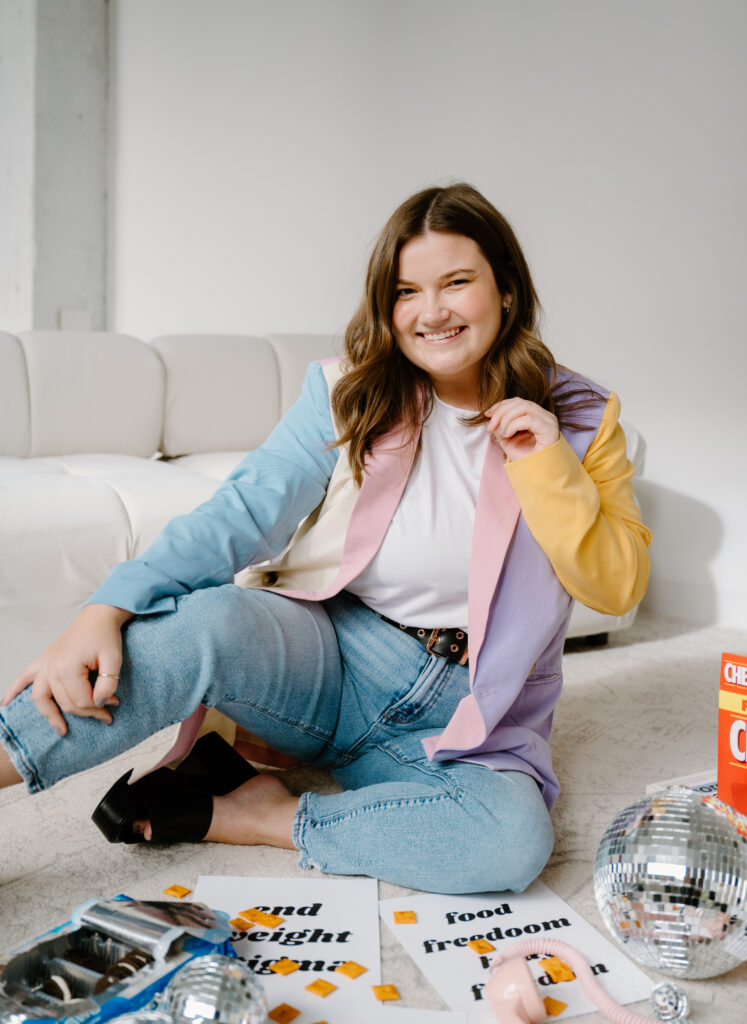
Body Image Coach & Eating Disorder Recovery Advocate – Meet Priscilla, LCSW, MSW, Certified Intuitive Eating Counselor
I’m an eating disorder therapist, body image coach, and professional diet culture disruptor helping women stop hating their bodies and start trusting themselves again. Equal parts therapist, anti-diet body image bestie, and lived-experience human, I’m passionate about making recovery feel less lonely and a lot more honest.
Want to stay connected? Follow along with me on Instagram!
How Eating Disorders Erode Self-Trust (And What Recovery Actually Rebuilds)
how i can support you

© CILLA HOPE WELLNESS LLC, 2024.
LEGAL
